Every Friday at sundown, Jewish homes around the world pause. Candles flicker, wine is poured, and a set of Shabbat prayers passed down for centuries fills the room.
This guide walks you through every Sabbath prayer, in order, from Friday night through Saturday. You’ll get the Hebrew, the transliteration, and the English meaning for each one — plus practical tips if you’re just starting out.
Table of Contents
What Is the Order of Shabbat Prayers?
Shabbat prayers follow a clear rhythm. Once you know the pattern, the whole evening (and the next day) makes sense.
Friday night, or Erev Shabbat, opens the day. This is when families light candles, bless their children, and share a festive meal filled with Shabbat blessings.
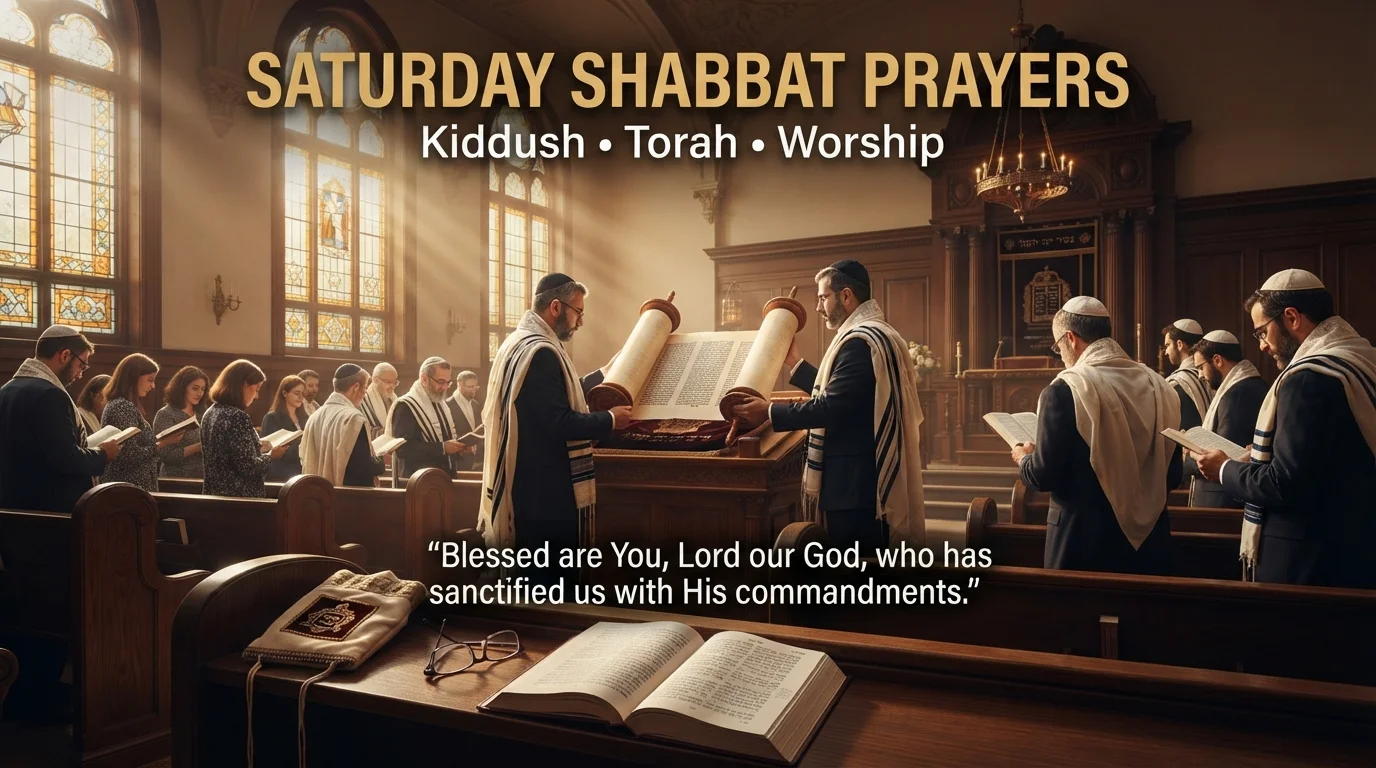
Saturday, or Yom Shabbat, continues the rest day with morning prayers, a Torah reading at synagogue, and a quieter rhythm at home.
Havdalah, said after nightfall on Saturday, closes Shabbat and marks the return to the new week.
Home rituals and synagogue liturgy work side by side. Home blessings are usually short — a few lines each — while synagogue services on Friday night and Saturday morning include longer, structured prayers like the Amidah and Shema. Both matter, and both count as Jewish Shabbat prayers.
Friday Night Shabbat Prayers (Erev Shabbat)
Friday night is where most families begin. Here is every Friday night Shabbat prayer, numbered in the order they’re traditionally said.
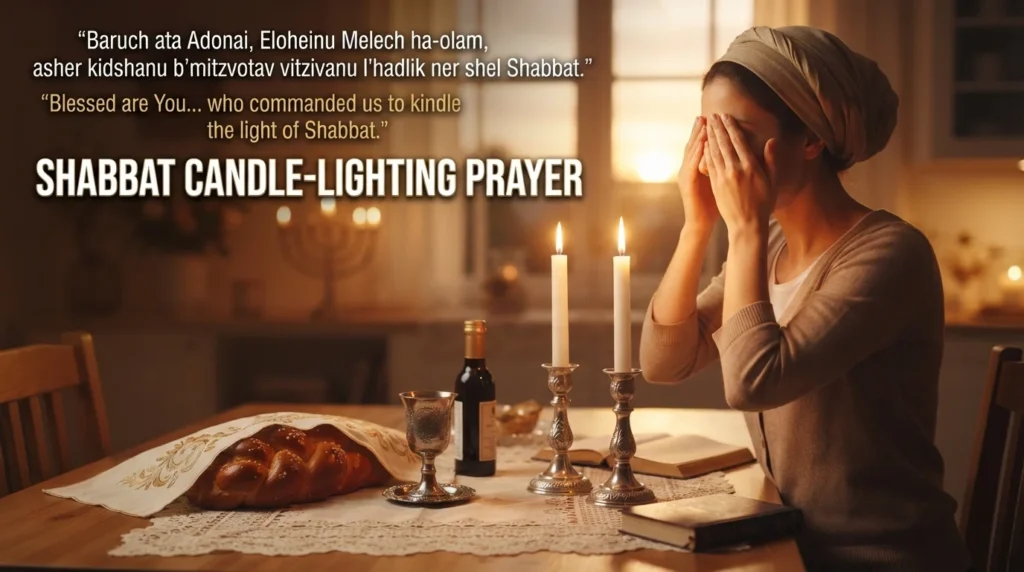
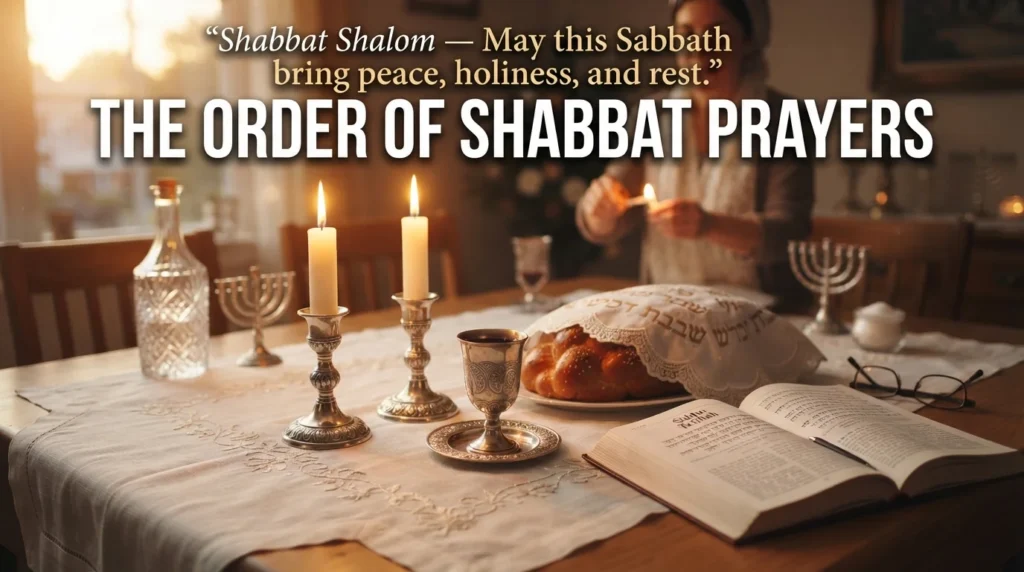
1. Candle-Lighting Blessing. Candles are lit shortly before sunset, traditionally eighteen minutes before, to mark the start of Shabbat. After lighting, many cover their eyes and say:
Baruch ata Adonai, Eloheinu Melech ha-olam, asher kidshanu b’mitzvotav vitzivanu l’hadlik ner shel Shabbat.
“Blessed are You, Lord our God, Ruler of the universe, who has sanctified us with His commandments and commanded us to kindle the light of Shabbat.”
2. Blessing for the Children. Right after the candles are lit, parents place their hands on each child’s head and bless them. Boys are blessed to be like Ephraim and Menashe; girls are blessed to be like Sarah, Rebecca, Rachel, and Leah. Both then receive the same closing lines, borrowed from the ancient priestly blessing: “May God bless you and protect you. May God show you favor and be gracious to you. May God show you kindness and grant you peace.”
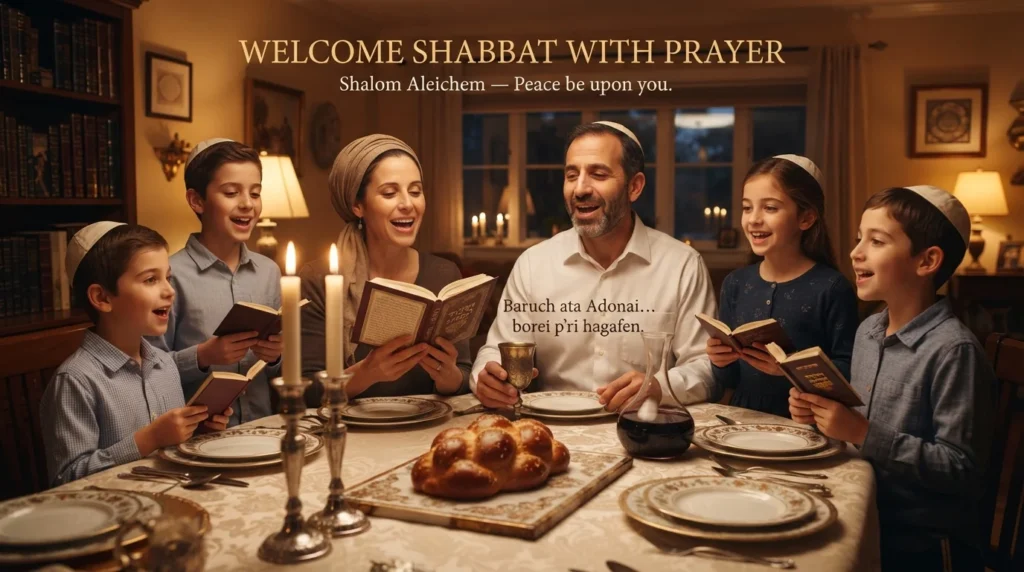
3. Shalom Aleichem. Sung at the table, this song welcomes the Sabbath in a poetic, almost musical way. Its name literally means “peace be upon you,” and it pictures peaceful messengers arriving to bring in the day of rest.
4. Eshet Hayil (Woman of Valor). Taken from the biblical book of Proverbs, this passage is sung as a tribute, often to the woman of the household. It praises strength, wisdom, and generosity.
5. Kiddush. This is the blessing over wine or grape juice that formally sanctifies Shabbat. It often begins with Vayechulu, a short biblical passage describing how God completed creation and rested on the seventh day. The core blessing over the wine reads:
Baruch ata Adonai, Eloheinu melech ha-olam, borei p’ri hagafen.
“Blessed are You, Lord our God, Ruler of the universe, who creates the fruit of the vine.”
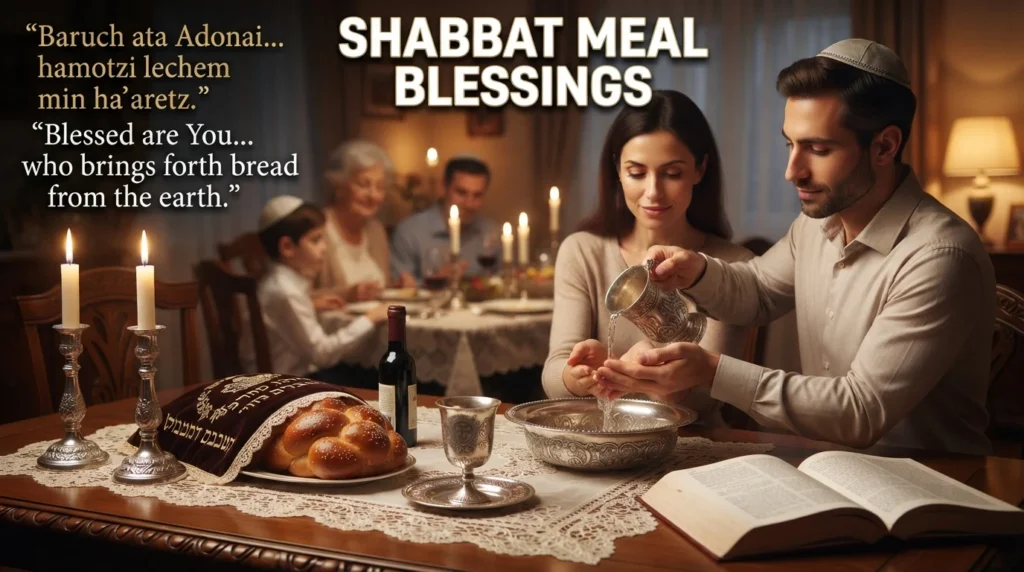
6. Netilat Yadayim. Before the meal, hands are washed with water from a cup, and this short blessing is recited afterward, thanking God for the commandment of washing.
7. Hamotzi. Just before the bread is eaten, this blessing gives thanks for bread “brought forth from the earth.” Many families stay quiet between the hand-washing and this blessing, keeping the moment focused.
8. Birkat Hamazon. Also called “benching,” this is a longer prayer of gratitude said after the meal. It thanks God for food, for the land, and for sustaining the Jewish people. On Shabbat, an extra psalm is added beforehand, and if three or more adults ate together, a short call-to-prayer known as a zimmun introduces it.
Must Visit: God Prayers: Powerful Prayers to Draw Closer to God and Find Peace, Strength & Blessings
The Saturday Shabbat prayers carry a different rhythm than Friday night. The pace slows further, and the focus shifts from ritual meal to communal worship and rest.
9. Shabbat Morning Kiddush. Before the Saturday midday meal, a shorter Kiddush is recited over wine. Unlike the Friday night version, it opens with a different biblical passage about the Israelites keeping the Sabbath as an eternal covenant.
10. Torah Service Blessings. At synagogue on Saturday morning, the Torah scroll is removed from the ark and read aloud in a set weekly portion. Blessings are recited before and after each reading by those called up to the Torah, called aliyot. This part of the service connects the day of rest to ongoing study and community life.
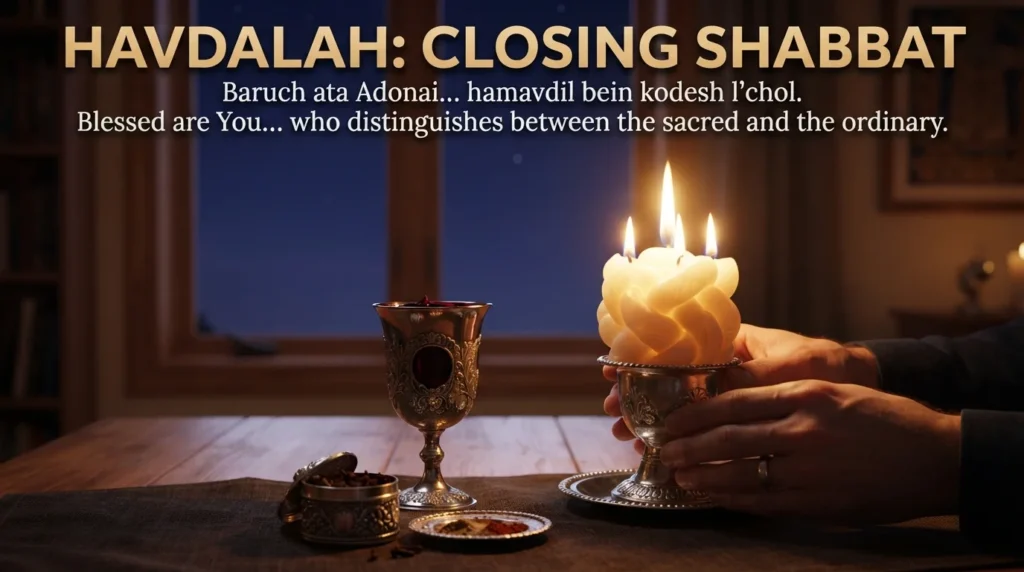
11. Havdalah. As Saturday night falls and three stars appear in the sky, Havdalah closes Shabbat. It uses wine, a braided candle, and fragrant spices, and it blesses the distinction between the sacred and the everyday. It’s a bittersweet, beautiful way to send Shabbat off until next week.
Interestingly, only about four in ten American Jews say they regularly or sometimes mark Shabbat in a personally meaningful way, according to Pew Research Center’s 2020 survey of Jewish Americans. That means there’s no single “correct” way to observe — many households pick and choose which prayers resonate most.
How Do Jews Say “Happy Sabbath”?
If you’re new to Shabbat, greetings can feel like their own small puzzle. Here’s the simple version.
“Shabbat Shalom” is the most common greeting. It literally means “peaceful Sabbath” and works any time from Friday afternoon through Saturday evening.
“Good Shabbos” is the Yiddish-influenced version, more common in Ashkenazi and Orthodox communities. “Shabbos” is simply the Ashkenazi pronunciation of “Shabbat.”
Both greetings mean the same thing, and either one is a safe, warm way to acknowledge the day — whether you’re at synagogue, at a friend’s table, or just texting someone before sundown on Friday.
Tips for a Meaningful Shabbat Prayer Practice
You don’t need to master every blessing overnight. A few small habits make a real difference.
Start with one prayer. The candle-lighting blessing is short, beautiful, and a natural place to begin if you’re new to this practice.
Say the words even if you can’t read Hebrew. The transliteration exists for exactly this reason. Reading it slowly, out loud, still counts.
Don’t rush the meaning. These prayers aren’t just recited — they’re meant to be felt. Pausing for even a few seconds after each blessing changes the whole experience.
Use audio to learn pronunciation. Hearing a prayer sung or chanted out loud, even a handful of times, builds confidence faster than reading alone.
Let it be flexible. Some households recite every blessing every week. Others choose just a few. Both approaches are valid ways to bring Shabbat prayers into a home.
FAQ
What is the order of the prayers on Shabbat?
The order starts Friday night with candle-lighting, the children’s blessing, Shalom Aleichem, Kiddush, hand-washing, Hamotzi, and Birkat Hamazon after the meal. Saturday continues with morning Kiddush and synagogue Torah readings, and Havdalah closes Shabbat Saturday night.
What is the Sabbath prayer?
There isn’t just one. “The Sabbath prayer” usually refers to the set of Shabbat blessings — candle-lighting, Kiddush, Hamotzi, and Birkat Hamazon — recited across Friday night and Saturday.
How do Jews say happy Sabbath?
Most people say “Shabbat Shalom,” meaning “peaceful Sabbath.” In Yiddish-influenced communities, “Good Shabbos” is also common.
What is a good prayer to start the Sabbath?
The candle-lighting blessing is the traditional starting point. It’s short, marks the official beginning of Shabbat, and is said as the sun sets on Friday.
Conclusion
Shabbat prayers aren’t complicated once you see the shape of them: light, bless, welcome, sanctify, give thanks, and rest. Whether you say every line in Hebrew or just light a candle and pause for a breath, you’re taking part in a tradition that has anchored Jewish life for thousands of years.
Hassan Abroy is the founder and writer behind Morning Prayer Hub, where he shares daily prayers and devotionals to help readers begin each day with faith, gratitude, and a quiet mind. He writes with a simple goal: to make prayer feel accessible, personal, and part of everyday life.