Losing someone you love leaves a silence that words rarely fill. Funeral prayers offer a gentle way to speak into that silence, giving grief a voice and grief a place to rest.
This guide gathers comforting prayers for the loss of a loved one, along with simple guidance on how to pray them, when to use them, and how to pair them with a heartfelt poem.
Table of Contents
How to Pray a Funeral Prayer
A funeral prayer doesn’t need fancy words. It needs honesty, warmth, and a steady voice.
Start with a name. Saying the person’s name out loud grounds the prayer and makes it personal, not generic.
Keep the structure simple. Most funeral prayers follow three short parts: an opening word of thanks or trust, a request for comfort or peace, and a closing “Amen” or moment of silence.
Speak slowly. Grief makes rooms quiet. A slower pace gives mourners space to breathe and reflect between phrases.
It’s okay to pause. If your voice shakes, stop for a moment. Nobody expects perfection at a funeral; they expect sincerity.
Interestingly, prayer remains a widespread American habit even as religious life shifts. Pew Research’s most recent Religious Landscape Study found that a large share of U.S. adults still pray daily, and that prayer frequency rises sharply during moments of grief, illness, or crisis — which is exactly when funeral prayers matter most.
The Best Comforting Funeral Prayers for the Loss of a Loved One
What is the best prayer for a funeral? The best prayer is one that feels true to the person being remembered and brings genuine comfort to the room. Below are several trusted options for different moments.
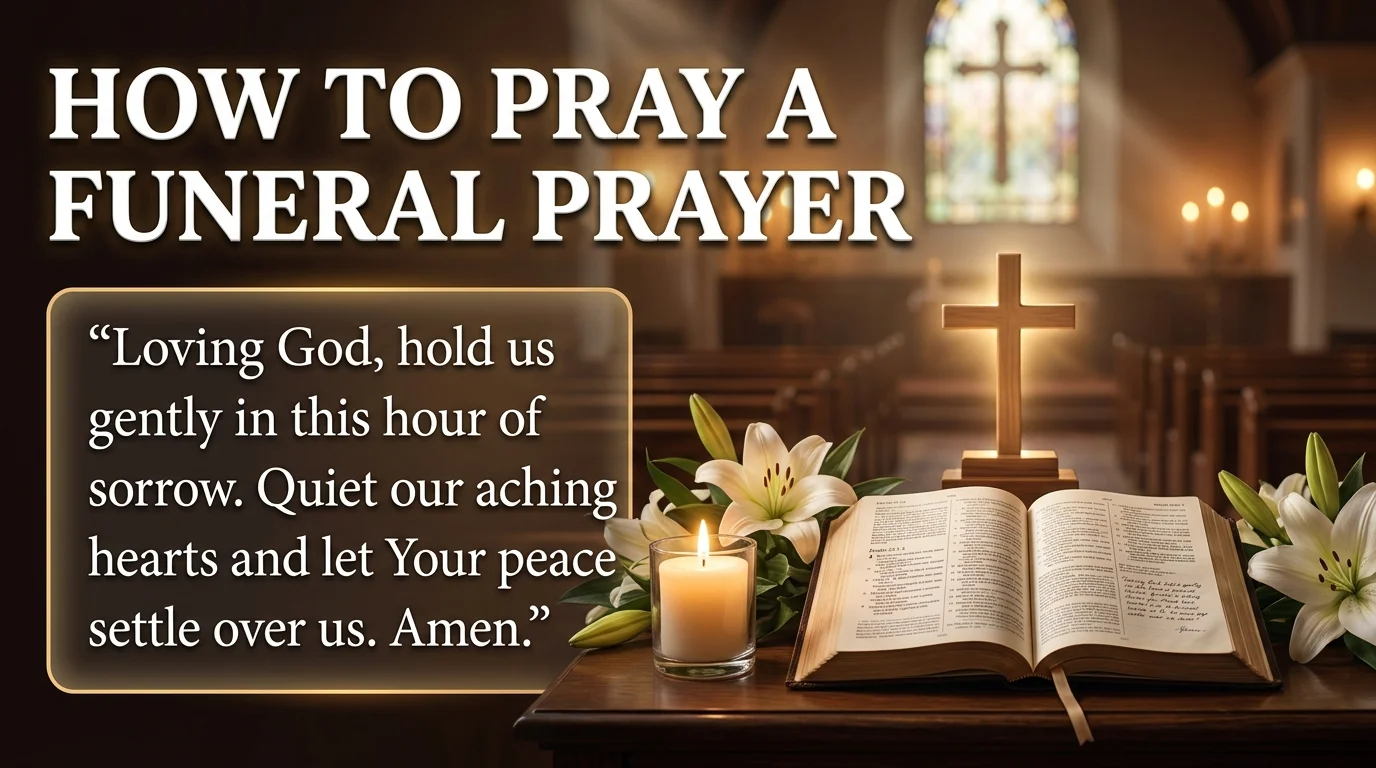
Prayer 1 — A Prayer for PeaceLoving God, hold us gently in this hour of sorrow. Quiet our aching hearts, and let Your peace settle over this room like a soft light. Amen.
Prayer 2 — A Prayer for StrengthLord, our legs feel weak and our hearts feel heavy. Lend us Your strength today, so we may carry this grief together. Amen.
Prayer 3 — A Prayer for the FamilyHeavenly Father, wrap this family in Your care. Let them lean on one another, and let them feel Your presence in every kind word spoken here today. Amen.
Prayer 4 — A Prayer for Sudden LossGod of comfort, this loss came too fast and too soon. Steady our shaking hands and confused hearts, and remind us we are not alone in this pain. Amen.
Prayer 5 — A Short Prayer of GratitudeThank You, Lord, for the life we shared with [Name]. Thank You for every memory that still makes us smile through tears. Amen.
What is a good prayer to start a funeral service? An opening prayer should welcome guests, acknowledge the loss, and set a tone of quiet reflection before the eulogy begins.
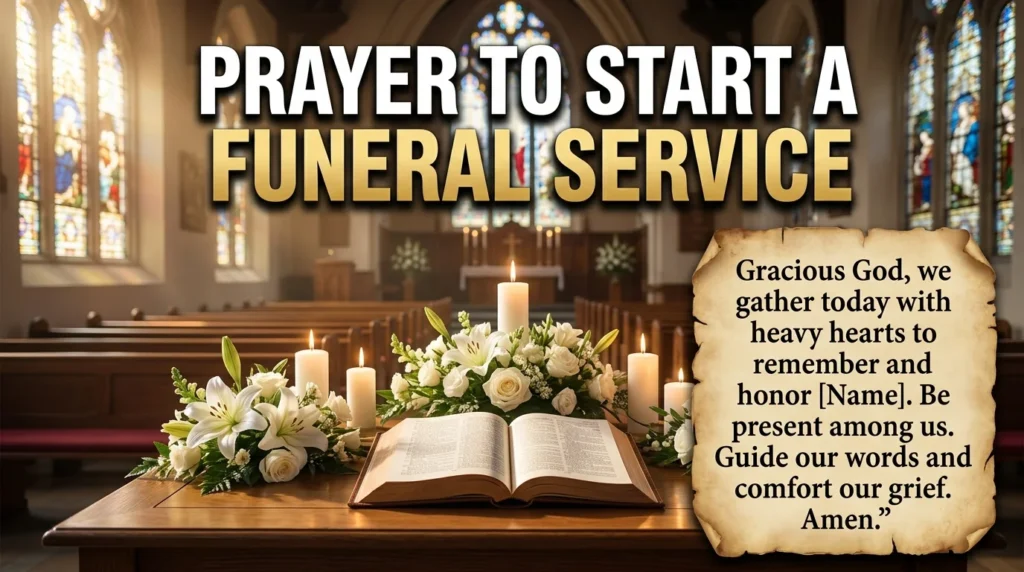
Opening Prayer 1Gracious God, we gather today with heavy hearts to remember and honor [Name]. Be present among us. Guide our words and comfort our grief. Amen.
Opening Prayer 2Dear Lord, as we come together to say goodbye, calm our anxious minds. Help us find comfort in shared memories and in one another’s company. Amen.
Opening Prayer 3Heavenly Father, we ask for Your presence as we begin this service. Turn our sorrow into gratitude for a life well lived. Amen.
These openings work well spoken by a funeral officiant, pastor, or family member, and they naturally lead into readings, eulogies, or a moment of silence.
Funeral Prayers Across Different Faiths
Grief looks different across traditions, and funeral prayers reflect that diversity.
Christian and Catholic traditions often lean on Scripture, especially Psalm 23, and phrases about eternal rest and resurrection hope.
Jewish funerals commonly include the Mourner’s Kaddish, a prayer that praises God rather than mentioning death directly, offered in memory of the deceased.
Islamic funerals use the phrase “Inna lillahi wa inna ilayhi raji’un” — meaning we belong to God and to Him we shall return — spoken as an act of submission and comfort.
Hindu funeral rites often include mantras chanted during cremation, focused on the soul’s journey and release (moksha).
Buddhist funerals emphasize impermanence, chanting sutras to help the spirit find peace and a favorable rebirth.
Non-religious or interfaith services can still include comforting words focused on love, memory, and legacy — without referencing a specific deity.
Goodbye Poems for a Funeral
What is the goodbye poem for a funeral? A goodbye poem is a short, heartfelt verse read aloud to express love, closure, and remembrance, often paired with a prayer.
Short Goodbye PoemDo not grieve my going far, For love leaves no door ajar. I am the wind, the light, the rain, Living on in your heart again.
Graveside Farewell PoemRest now, dear one, your journey’s done, Your race is finished, your battle won. We hold you close in memory’s hand, Until we meet in that gentle land.
These poems work well after a closing prayer, giving mourners a final, gentle moment before departing.
FAQs
What is the best prayer for a funeral?
The best funeral prayer is short, sincere, and fits the relationship between the speaker and the deceased. Prayers focused on peace, strength, and gratitude tend to comfort the widest range of mourners.
How to pray a funeral prayer?
Speak slowly, use the person’s name, and follow a simple structure: open with trust, ask for comfort, and close gently. Pausing is completely normal.
What is the goodbye poem for a funeral?
It’s a short verse read at the service or graveside to express love and closure. It’s often read right after the closing prayer.
What is a good prayer to start a funeral service?
A welcoming prayer that acknowledges grief, asks for God’s presence, and invites reflection works best to open a funeral service.
Conclusion
Funeral prayers don’t need to be long or perfectly worded to bring comfort. A few honest sentences, spoken with care, can hold a grieving room together. Whether you choose a short prayer, an opening blessing, or a goodbye poem, what matters most is that it comes from the heart.
Hassan Abroy is the founder and writer behind Morning Prayer Hub, where he shares daily prayers and devotionals to help readers begin each day with faith, gratitude, and a quiet mind. He writes with a simple goal: to make prayer feel accessible, personal, and part of everyday life.